Past lives caught in the dust of trees
Jul 28th
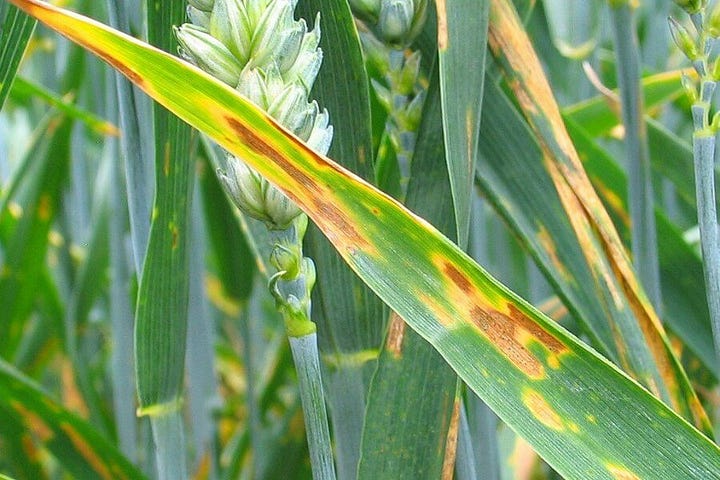
I’m currently working at the Annals of Botany to help out with their social media side. There’s a bit more to it than subtly dropping links to their site, like this one. At the moment I’m struggling with the Facebook integration, but there’s a fun side too. I wouldn’t have browsed AoB if I’d not been hired, and that means I would have missed out on papers like Phytoliths in woody plants from the Miombo woodlands of Mozambique by Julio Mercader and his team at Calgary. I’ll admit the article title doesn’t say much to the layman, but it’s actually something deeply cool that I didn’t find out about till my MPhil.
If megaliths are big stones and microliths are small stones like arrowheads, then phytoliths are clearly phyto-stones. Phyto- in this case meaning plant.
Phytoliths are microscopic stones formed in some plants. When a plant’s roots draw up water they also draw up the minerals dissolved within it. In the case of the silica this gets pulled out of the water and deposited either in the cells or between the cells. The exact shape of the phytoliths varies on the part of the plant the silica is deposited in, the availability of More >
Do we need an Industrial Archaeology?
Jul 24th
Cromford Canal. Click for larger image.
It’s easy to take a World Heritage Site for granted when it’s on your doorstep. I had thought of shooting a short portfolio of Cromford for a competition. They required ten photos. After looking into the project I’ve decided that the competition isn’t going to happen for me, but a short photo essay on Cromford, or possibly the Derwent Valley Mills, remains an interesting idea.
Industrial Archaeology can get short shrift from other archaeologists. Often there’s written records, plans and for some places oral accounts of work at a site. Is Archaeology necessary? Mark Henshaw, the Archaeology Dude, makes a good argument that Archaeology can draw multiple lines of evidence to inform histories of the past. I wouldn’t discount that, and I think his point, Archaeology isn’t just about digging, is very important from an American perspective because there Archaeology is seen as a branch of Anthropology. In the UK you’re more likely to see Archaeology paired with History or Classics. So do we really need Industrial Archaeologists when there so many Early Modern Historians.
I think another factor Archaeology brings is spatial thinking. Looking at the early days of the professionalisation of Archaeology in Britain, one of the More >
More carbon dioxide isn’t necessarily good news for plants
I was also blogging at AoB Blog yesterday on why more carbon dioxide isn’t necessarily good news for plants.
The location of the new henge
I didn’t know where the new henge was. Clearly I hadn’t read enough. Dennis Price has the location of the new henge on his site Eternal Idol.
What does the new henge mean for Stonehenge?
Jul 22nd
Confusion at Stonehenge
I don’t know.
I think the coverage at places like the BBC are good, David Gregory found it exciting and I thought his story was a good read. However there are too many details missing from the reports to come to any conclusions. That’s not a complaint about the coverage, the mass-media isn’t an archaeological journal. It’s not even a gripe about publication by press-release because Mike Parker Pearson showed last year that news leaks out, so why not give the brief details out properly?
On the other hand the Birmingham team are looking at the landscape and, from reading the reports, I’ve no idea where this new site is in relation to Stonehenge. It’s almost certainly in sight of Stonehenge, but then the landscape round there is littered with barrows, Bronze Age burial mounds. The location will affect how we see the landscape. This henge isn’t to be confused with Bluestonehenge, the site found by the river Avon near Stonehenge last year. It’s also not Woodhenge, despite being made of wood, because that’s a different site near Durrington Walls, which is another site that has been in the news in recent years.
There’s not a lot I can say about the More >
Survey: How do you know you’re doing it right?
Archaeological surveys tend to be samples of a site. How do you know you’re doing it right when you can’t see the artefacts you’ve missed? Couldn’t you be missing large chunks of information because it’s not what you’re expecting to see? David Pettigrew guest blogs at The Archaeology of the Mediterranean World,
AoB Blog goes live (or what I’m doing on my summer holidays)
Jul 21st
AoB Blog is now live at aobblog.com. The design looks similar to this site, and that’s partly because I’ve been using this site to test some code. It’ll be part of the web presence I’m building for the Annals of Botany. Surprisingly there is some archaeological relevance. Papers are open to non-subscribers after a year and some of those are archaeobotanical.
I’ve emailed a couple of people about an interesting story on reburial. I’m trying to get a bit beyond the press release, but I’m not sure if that will happen soon as they’re both likely to be very busy.
In the meantime I’ve blogged Moving beyond the ‘One-dinosaur-fits-all’ model of science communication at AoB Blog. It probably has some relevance to archaeological / historical outreach too.
Four Stone Hearth 97 – the past fortnight of anthroblogging
This edition of Four Stone Hearth is a good one. Judith Weingarten has done an excellent job hunting down the best in anthroblogging from the past two weeks. As always it’s archaeology, bioanthropology, cultural anthropology and linguistics that’s on offer.
Archaeology under fire
Anthroslug the Much Put-Upon notes a hazard archaeologists can face in the field, landowners with more guns than sense.
…and now the blog re-design in English
Jul 20th
Gaspar Melchor de Jovellanos Blogging, after Franciso de Goya y Lucientes by Mike Licht
It’s simple. I looked at my blog and decided I didn’t like it.
The idea was good. I’m spending more time on various social network sites, so aggregating that activity onto one site sounds clever. However, the blog was not the way to do it. Links are often fairly baldly posted to FriendFeed or Twitter and only make brief appearance on this site. So the aggregation wasn’t happening. In addition the changes I’d made to make it a poor aggregator also made it a poor blog. It was an experiment worth trying, but it hasn’t worked.
So this update is partly necessity and it’s also partly to test out some other ideas. I’ve been hired by the Annals of Botany to do stuff for them. That’ll be launched during the summer but a blog will be part of it. Changing theme means I can test out some of the ideas on this blog with a live audience. For example I’ve added a Links category. Link posts will look different on the blog, and will show up in the feed with a twist. If all I’m doing is saying “Hey look More >